I love old boats almost as much as crumbly doors but not so many have made it into paintings or textiles ( yet!) although I've made a few journal quilts.
Gythion is a working port and our hotel room looked out over the harbour. Sunrise was accompanied by the gentle put-put-put of small fishing boats heading out to sea. We enjoyed eating their catch ( fish soup, octopus marinated in red wine and grilled sardines were among our favourite dishes)
Friday, 12 May 2017
Greek Doors
Regular readers will know that I have a bit of a thing ( ok , obsession) about crumbly doors, Greece being a particularly fertile hunting ground and source of inspiration for many watercolours and quilts. This visit was no exception! I didn't get the chance to pay homage to my favourite in Anavriti due to tight schedule but I made some new discoveries.
A different kind of door, the entrance to Hades at Tenaro !
Sunday, 7 May 2017
Greek Orchids and other wildlife
A week ago we had just landed back at Heathrow (1/2 an hour early) after a fantastic week in Gythion in the far South of Greece. I posted photos every day on Facebook ( people probably got bored of all the sunrise shots but I didn't!) but life having taken over again and Ian being off sick with a horrible bug I haven't had much of a chance to select ones to blog about
I'd thought I'd start off with the flowers, particularly the orchids which we saw in abundance. It took me several days to work out that surprisingly my phone took better pictures than my camera in low light levels - I have lots of blurred shots of Anacamptis and Serapias which I'm not going to share with you!
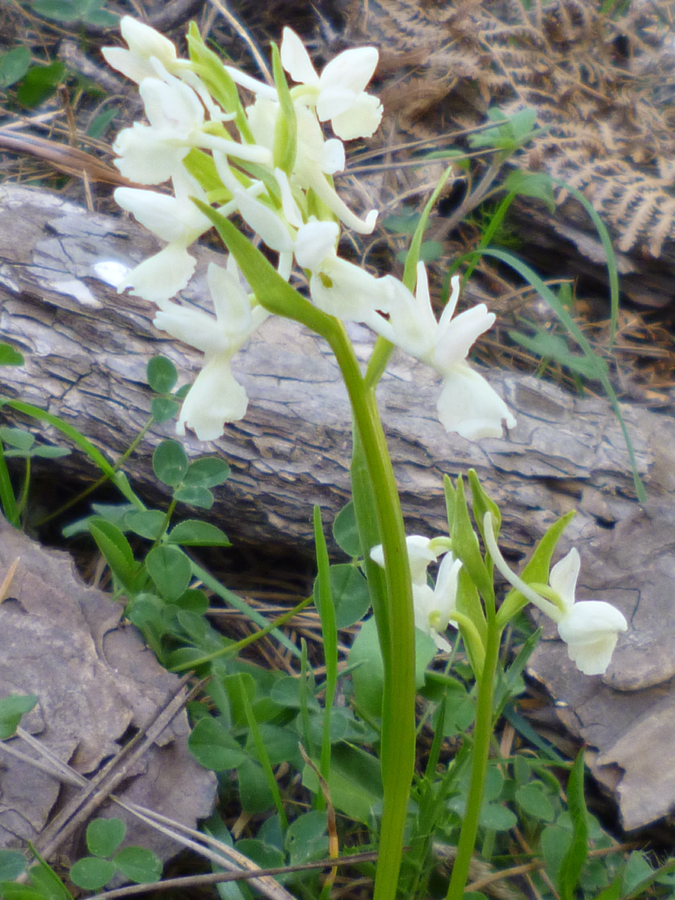
The last day's walk was the highlight, walking up the Anavriti Gorge. Saw literally hundreds of Orchis quadripunctata which despite its name, more usually has 2 spots rather than 4. Mixed in with Cyclamen they were a spectacular sight, photos just don't do them justice.
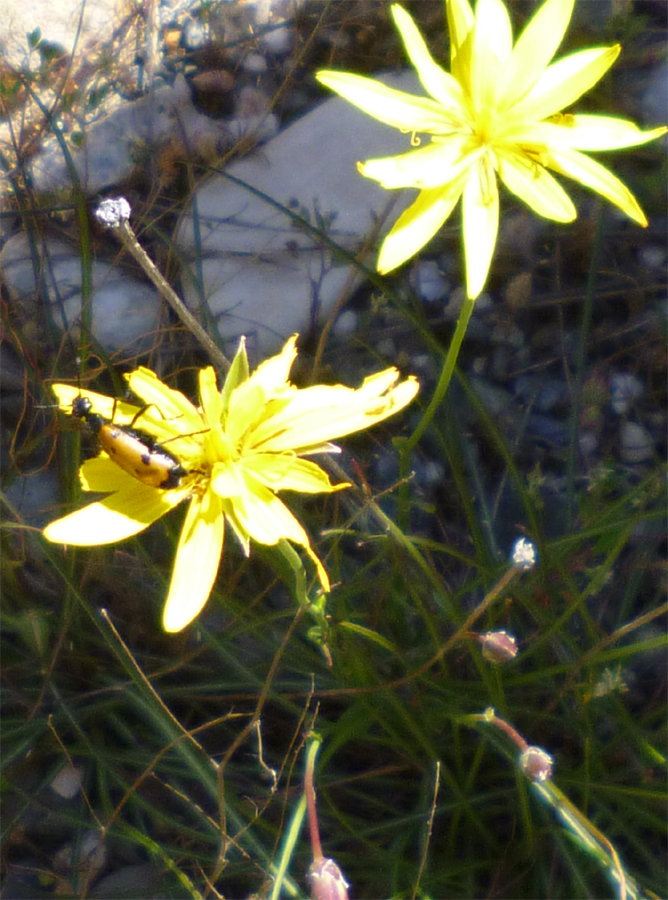
Lots of wildlife around - spiders, petal-eating beetles, birds of prey and heard cuckoos
But it's that magical combination of pink cyclamen and orchids in profusion that will remain with me for a very long time.
I'd thought I'd start off with the flowers, particularly the orchids which we saw in abundance. It took me several days to work out that surprisingly my phone took better pictures than my camera in low light levels - I have lots of blurred shots of Anacamptis and Serapias which I'm not going to share with you!
The last day's walk was the highlight, walking up the Anavriti Gorge. Saw literally hundreds of Orchis quadripunctata which despite its name, more usually has 2 spots rather than 4. Mixed in with Cyclamen they were a spectacular sight, photos just don't do them justice.
Orchis italica
At least 5 different Ophrys species ( above)
Aceras anthropophrum
Neotinia maculata (in fruit)
Birthday orchid spotter
Dactylorhiza romana (probably)
Lots of wildlife around - spiders, petal-eating beetles, birds of prey and heard cuckoos
But it's that magical combination of pink cyclamen and orchids in profusion that will remain with me for a very long time.
Thursday, 4 May 2017
Ways Into Abstract Painting Week 1
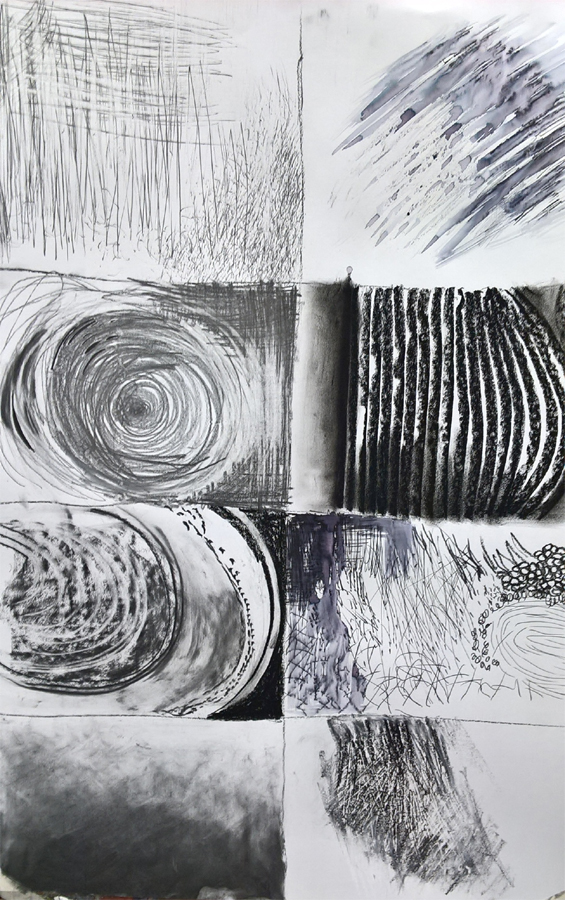
After lunch we divided paper into 4 and chose an object to draw using the marks we'd developed in the morning. The idea was that these drawings would become more abstracted and simplified like Picasso's bulls ( above) using different viewpoints and scales. I chose a red teapot which is an old friend from many a still life class and like many in the group found it difficult to apply the free mark-making to an object - like patting your head and rubbing your tummy at the same time. Next week colour!
Thursday, 20 April 2017
Contemporary Drawing Sketchbook : final results
I'm rather pleased with the artists' book based on the theme of positive/negative I produced as a result of the Contemporary Drawing Sketchbook course at City Lit. I'd done a lot of preparation in advance of the class : painting the cover and stitching and drawing a variety of pages so what I did in the final session was draw with white ink on the cover and tracing the same pattern on the reverse but write the text associated with 'the elusive spark'.
![]() |
| cover - based on fold out etching in book from 1787 |
![]() |
| inside |
![]() |
| inside showing pamphlets attached to accordion |
![]() |
| cover folded up |
![]() |
| cover laid out flat |
![]() |
| Inside with pamphlets towards centre |
![]() |
| Inside with left hand pamphlet opened |
![]() |
| Inside with right hand pamphlet opened ( showing reverse of stitched page) |
![]() |
inside with text
|
One of the reasons I chose this course was to bridge the gap ( ok chasm!) making links between my observational drawings and paintings and the design work for my textile pieces . It's certainly given me a lot to think about in regards to my sketchbook practice. I've written before comparing my lab book records to my sketchbooks. Now I'm no longer working as a scientist , I'm not sure the lab book approach is as appropriate and I'm in the process of reviewing how to make my sketchbooks work better for me as I develop as an artist.
Subscribe to:
Posts (Atom)